
7 Anti-Inflammatory Breakfast Recipes for Women Over 40: A Skin Longevity Researcher's Daily Rotation
- gutasales
- Feb 19
- 11 min read
Updated: Feb 24

Medical Disclaimer: The following is a personal account of a skin health investigation. I am a Skin Health Investigator and founder of PearlyPetal with a BSc in Health and Social Care, not a licensed dermatologist or medical doctor. Hormonal changes after age 35 are complicated, so talk to your doctor or an endocrinologist before making big adjustments to your diet. This is not medical treatment or diagnosis; this is nutritional pattern observation, research interpretation, and lived experience from years of testing what actually supports calmer, more resilient skin.
Table of Contents
Why Breakfast Matters More After 40 (And Why I Was Doing It Wrong) {#why-breakfast-matters}
“If your skin looks puffy, dull, or ‘inflamed-tired’ by mid-afternoon no matter how good your skincare is, your breakfast is probably the problem.”

I spent my mid-thirties drinking coffee on an empty stomach and calling it intermittent fasting. By 10 am, I was shaky. By 2 pm, I was ravenous. By evening, my face was puffy and dull, regardless of what skincare I applied.
The problem wasn't my products. It was my blood sugar.
Insulin sensitivity changes at the age of 35. Cortisol levels change. The meal that worked for me in my twenties granola, skim milk, and a banana turned into a spike-and-crash cycle that made my skin inflamed. I didn't put the pieces together until I started keeping track of my glucose levels, skin photographs, and energy levels. There was no doubt about the connection.
Days I ate protein and fat within an hour of waking, my skin looked calmer. Days I fasted or carb-loaded, I looked older by 3 pm.
Breakfast is not about calories. It is about signalling. You are telling your body, first thing, whether today is a stress day or a repair day. Your skin hears that signal.
I developed this seven-day rotation because I get bored. Because I travel. Because some mornings I have twenty minutes and some I have five. Each breakfast hits the same targets protein, omega-3s, antioxidants, low glycemic load but approaches them differently. After three years of testing, these are the only seven I keep in permanent rotation.
The Inflammation-Skin Connection: What My Research Revealed {#the-inflammation-skin-connection}
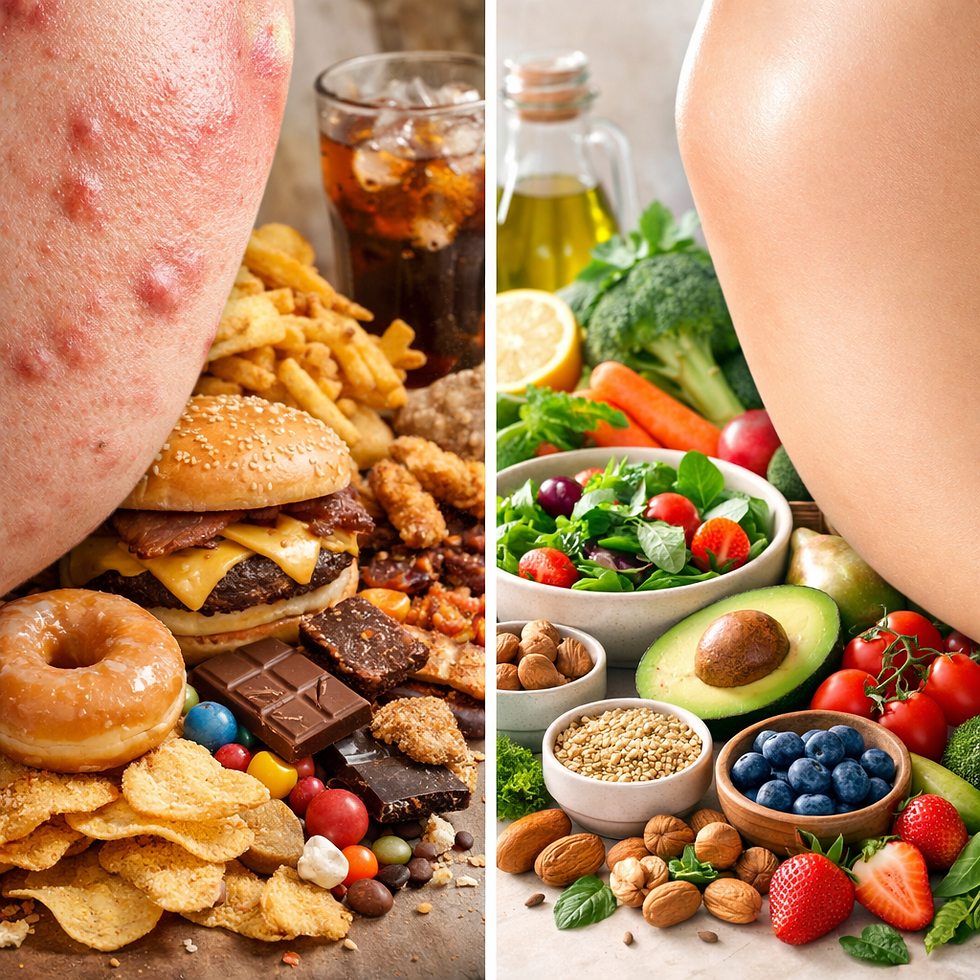
Chronic low-grade inflammation is the root of accelerated skin ageing after 40. I have read the studies. I have tracked my own CRP markers. I have photographed my face on high-inflammation days and low-inflammation days. The difference is not subtle.
Inflammation degrades collagen. It impairs barrier repair. It triggers melanin production, leading to uneven tone. It breaks down the lipid matrix that keeps skin plump. You can address this topically and you should but you cannot out-moisturise an inflammatory diet.
The research on dietary patterns and skin ageing consistently points to the same foods: omega-3 fatty acids, polyphenols, fibre, and fermented foods. The Mediterranean diet shows a measurable correlation with reduced wrinkle depth. Glycemic control directly impacts skin elasticity.
My breakfasts are designed around these mechanisms. Not trends. Not what looks good on Instagram. What actually modulates inflammation based on clinical evidence? Large reviews in journals like Nutrients and Dermato-Endocrinology consistently show that low-glycemic, omega-3–rich, polyphenol-heavy diets are associated with better skin elasticity, stronger barrier function, and slower visible ageing.
Large reviews in journals like Nutrients and Dermato-Endocrinology consistently show that low-glycemic, omega-3–rich, polyphenol-heavy diets are associated with better skin elasticity, barrier function, and slower visible ageing.”
If you want the deeper dive on how I fixed my own barrier through kitchen changes, read The Kitchen Mistakes That Were Sabotaging My Barrier (And the 3 Recipes That Fixed It). That was my starting point. This is my maintenance protocol.
My 7 Daily Breakfasts: The Complete Rotation {# my-7 Daily-breakfasts}

I eat these in order, Monday through Sunday, then repeat. The rotation prevents boredom. It ensures nutritional diversity. It makes grocery shopping automatic.
Monday: The Cortisol-Balancing Bowl {#monday}
Why Monday: Cortisol naturally peaks early in the week. This breakfast buffers the spike without suppressing it.
What goes in:
2 tablespoons grass-fed collagen peptides
1 tablespoon ground flaxseed
½ cup full-fat Greek yoghurt (plain, no sugar)
½ cup frozen wild blueberries
1 teaspoon raw honey
½ teaspoon cinnamon
Squeeze of fresh lemon
How I make it: I added flaxseed and collagen in a bowl. Put in yogurt. Put frozen blueberries on top. As I eat, they thaw a little and make a sauce. Put honey on everything, then sprinkle cinnamon on top and squeeze lemon over top. It takes four minutes.
The skin logic: Collagen provides glycine and proline for skin structure. Flaxseed offers ALA omega-3s. Blueberries deliver anthocyanins that reduce oxidative stress. Cinnamon modulates blood sugar response. The protein-fat-berry combination keeps glucose stable through the morning.
My modification: I add ¼ teaspoon of ashwagandha powder if I'm feeling extremely anxious. Adaptogens don't work right away, but I've been using them regularly for months and my baseline cortisol levels have gone down.
Tuesday: The Omega-3 Power Plate {#tuesday}
Why Tuesday: By Tuesday, I need sustained energy. This breakfast carries me through long meetings without the crash.
What goes in:
2 slices sourdough bread (true fermented sourdough, not commercial)
½ ripe avocado
2 smoked sardines (or mackerel if I have it)
1 soft-boiled egg
A handful of watercress or arugula
Drizzle of extra virgin olive oil
Lemon wedge
How I make it: Toast the sourdough. While toasting, boil an egg for six minutes. Smash avocado on toast. Top with sardines, halved egg, and greens. Olive oil and lemon. Takes eight minutes.
The skin logic: Sardines are the highest food source of EPA and DHA omega-3s, which reduce inflammatory cytokines and support skin barrier function. Egg provides choline for cell membrane repair. Avocado delivers monounsaturated fats and vitamin E. Fermented sourdough has a lower glycemic impact than standard bread.
My modification: If I can't eat fish in the morning, I switch to ¼ cup of walnuts instead of sardines. Different omega-3 profile, but still works.
Wednesday: The Antioxidant Overnight Oats {#wednesday}
Why Wednesday: Midweek, I need convenience. These are prepped the night before.
What goes in:
½ cup rolled oats (not quick oats)
1 tablespoon chia seeds
1 tablespoon hemp hearts
1 cup unsweetened almond milk
½ cup tart cherries (frozen, thawed)
1 tablespoon almond butter
Pinch of sea salt
Prep the night before: Combine oats, chia, hemp, and almond milk in a jar. Stir, refrigerate. In the morning, top with cherries and almond butter.
The skin logic: Melatonin and anthocyanins in tart cherries help reduce inflammation and improve sleep quality, which is important for skin regeneration while you sleep. Chia is good for your gut since it has ALA omega-3 fatty acids and fiber. Hemp hearts have all the amino acids and gamma-linolenic acid that help keep hormones in balance and skin hydrated.
My modification: In summer, I use fresh cherries or raspberries. In winter, I warm the oats slightly before adding toppings.
Thursday: The Protein-Satiety Skillet {#thursday}
Why Thursday: By Thursday, I'm often hungrier. This is my highest-protein breakfast.
What goes in:
2 pastured eggs
½ cup black beans (rinsed, from can)
½ cup spinach
¼ avocado
2 tablespoons salsa (no sugar added)
1 tablespoon olive oil
How I make it: In a small skillet, heat the olive oil. Add spinach and let it wilt. Add the beans and heat them up. Push to the side and break the eggs into the pan. Cook to your liking. Add avocado and salsa on top. It takes seven minutes.
The skin logic: Eggs provide choline, biotin, and vitamin A for skin cell turnover. Black beans offer zinc, which is crucial for wound healing and acne prevention. Spinach delivers lutein, which protects skin from oxidative damage. The combination of protein, fibre, and fat keeps blood sugar stable for hours.
My modification: I use roasted veggies instead of spinach if I have any left over. Be flexible.
Friday: The Gut-Healing Kefir Parfait {#friday}
Why Friday: My gut needs help at the end of the work week. When it comes to probiotics, kefir is stronger than yogurt.
What goes in:
1 cup plain kefir (full-fat, unsweetened)
2 tablespoons ground flaxseed
¼ cup raw pumpkin seeds
½ cup fresh or frozen mango
1 teaspoon turmeric powder
Pinch of black pepper
How I make it: Layer kefir in a bowl. Top with flaxseed, pumpkin seeds, and mango. Sprinkle turmeric and pepper. Stir before eating. Takes three minutes.
The skin logic: Kefir contains diverse probiotic strains that support the gut-skin axis. Pumpkin seeds are high in zinc and magnesium, both critical for skin repair. Turmeric's curcumin is a potent anti-inflammatory, but it needs black pepper for absorption. Mango provides vitamin C for collagen synthesis.
My modification: If kefir is too tart for you, start with half kefir, half full-fat yoghurt. Gradually shift the ratio.
Saturday: The Savoury Japanese Breakfast {#saturday}
Why Saturday: Weekends, I have more time. This breakfast feels like a ritual.
What goes in:
1 cup cooked short-grain brown rice (leftover from dinner)
1 soft-boiled egg
¼ cup natto (fermented soybeans)
2 tablespoons pickled ginger
1 sheet nori, torn
1 teaspoon sesame oil
Splash of low-sodium soy sauce or tamari
How I make it: Warm the rice slowly. Add the natto, ginger, nori, and half of an egg on top. Add soy sauce and olive oil. It takes longer if the rice isn't already ready, but only ten minutes if it is.
The skin logic: Natto is the highest food source of vitamin K2, which directs calcium to bones instead of arteries and skin (preventing calcification that contributes to ageing). Fermented soy has genistein, which supports skin elasticity. Seaweed provides iodine for thyroid function critical for hormonal skin health.
My modification: Natto is polarising. If you can't acquire the taste, swap for miso soup on the side. Different benefits, still fermented.
Sunday: The Collagen-Boosting Pancakes {#sunday}
Why Sunday: Leisurely morning, family time. These feel indulgent but deliver nutrition.
What goes in:
1 ripe banana, mashed
2 eggs
2 tablespoons collagen peptides
1 tablespoon coconut flour
½ teaspoon cinnamon
Butter or coconut oil for cooking
Toppings: fresh berries, a dollop of Greek yoghurt, and a drizzle of maple syrup
How I make it: Mash the banana. Whisk in eggs, collagen, coconut flour, and cinnamon. The batter will be thin. Cook in butter like small pancakes, 2-3 minutes per side. Makes 6-8 small pancakes. Takes fifteen minutes.
The skin logic: Bananas are a good source of potassium and prebiotic fiber. Eggs are a good source of protein and choline. Collagen peptides contain certain amino acids, like glycine, proline, and hydroxyproline, that help keep the skin's structure. Coconut flour has a low glycemic index and adds fiber.
My modification: My kids eat these too. I make a double batch, refrigerate extras for Monday morning if I'm rushed.
If you want to make this effortless (and actually stick to it), I turned this exact rotation into a simple printable you can use in real life.
Want this done-for-you?
I turned this rotation into a printable 7-Day Anti-Inflammatory Breakfast Planner + Shopping List you can keep on your fridge or phone.
The Nutrition Breakdown: What Each Breakfast Delivers {#the-nutrition-breakdown}

I tracked these in Cronometer for a month. Here is the average macronutrient and micronutrient profile per breakfast.
Nutrient | Monday Bowl | Tuesday Plate | Wednesday Oats | Thursday Skillet | Friday Parfait | Saturday Japanese | Sunday Pancakes |
Calories | 385 | 445 | 420 | 410 | 395 | 380 | 425 |
Protein (g) | 28 | 26 | 18 | 24 | 22 | 20 | 19 |
Fat (g) | 16 | 28 | 22 | 24 | 20 | 14 | 18 |
Carbs (g) | 32 | 28 | 42 | 28 | 38 | 48 | 42 |
Fiber (g) | 8 | 6 | 12 | 10 | 8 | 8 | 6 |
Sugar (g) | 14 | 3 | 8 | 4 | 22 | 2 | 16 |
Omega-3 (g) | 3.2 | 2.8 | 4.5 | 0.8 | 2.2 | 1.2 | 0.6 |
Vitamin C (mg) | 18 | 12 | 8 | 15 | 35 | 10 | 12 |
Vitamin E (mg) | 4.2 | 6.5 | 8.2 | 4.8 | 5.5 | 3.2 | 2.8 |
Zinc (mg) | 2.1 | 2.8 | 3.2 | 3.8 | 4.2 | 2.5 | 2.0 |
Glycemic Load | Low | Low | Medium | Low | Medium |
Key patterns I optimised for:
Protein: Minimum 18g per breakfast for satiety and skin repair
Omega-3: At least 3g from direct sources (fish, seeds) four times weekly
Fibre: Minimum 6g for gut health and blood sugar stability
Glycemic load: Primarily low to prevent inflammation spikes
If you want a complete meal plan that extends beyond breakfast, download my 7-Day Barrier Reset Meal Plan printable. It includes lunch, dinner, and snack rotations that complement these breakfasts.
How I Prep These in Under 10 Minutes (Real Talk) {#how-i-prep-these}

I do not spend Sunday meal prepping. I have tried. It doesn't fit my life. Instead, I use these strategies:
The Pantry System:
Collagen, flaxseed, chia, hemp, and oats live in glass jars on my counter. Visible, accessible.
Canned sardines, black beans, and pickled ginger are stocked in bulk.
Frozen berries, cherries, and mango are always in my freezer.
The Night-Before Habit:
Wednesday oats are prepped Tuesday night.
Saturday rice is cooked from Friday dinner, extra reserved.
We cook six eggs at a time and keep them in the fridge for Tuesday, Thursday, and Saturday.
The Emergency Backup:
If I have literally five minutes and zero ingredients prepped: 2 eggs scrambled in butter, a handful of spinach, and a side of leftover roasted vegetables. Takes six minutes. Still anti-inflammatory.
The Travel Version:
When I'm travelling, I pack single-serve collagen packets, individual nut butter packets, and a small bag of chia seeds. I buy Greek yoghurt and fruit locally. Protocol maintained.
For the mornings when even this feels like too much, I have my Lazy Girl 3-Step Barrier Reset routine. It is not optimal. It is sufficient. Progress, not perfection.
What Changed in My Skin (And When) {#what-changed-in-my-skin}
I kept track of everything because I needed to know what was working. Feel free to use this schedule as is.
Week 1-2: Digestive adjustment. More regular elimination. Skin looked the same, possibly slightly more congested as my body recalibrated.
Week 3-4: Less bloating in the morning. That "puffy mask" face wasn't what I woke up with. The energy level was more steady all day.
Week 6: The 3 pm dullness stopped. My skin maintained a "glow" through the afternoon that previously required makeup.
Week 8: Breakouts along my jaw reduced significantly. I believe this was the combination of stabilised blood sugar and reduced cortisol.
Week 12: I ran out of my expensive vitamin C serum and didn't panic. My skin tone was even without it. The inflammation that had required constant topical management was internally controlled.
Month 6: This is when I noticed the "bounce." Pressing on my cheek, the skin sprang back faster. Collagen synthesis supported by nutrition, sleep, and reduced inflammation was showing structural change.
Year 1: The crepey feel on my chest and neck got better. Not in a big way. In a big way. I stopped covering those portions since they were plenty.
Year 3: Resilience. Travel, stress, occasional poor sleep my skin recovers. The baseline is strong. This is what skin longevity means to me.
If You're Starting This Tomorrow

Refrain from implementing all seven breakfasts next week. You will be unsuccessful. I was unsuccessful in my attempt to overhaul everything simultaneously.
Week 1: Pick one. The Monday bowl is easiest. Eat it for seven days. Notice your energy, your hunger, your skin.
Week 2: Add Tuesday. Now you have two options. Alternate.
Week 3: Add Wednesday. Three breakfasts in rotation.
Continue until you have all seven. By week seven, you will know which breakfasts fit your life and which need modification. You will have built the habit.
Keep track of something. Photos in the same light. Energy levels range from 1 to 10. How long till you get hungry again? You need facts to trust the process, especially if the adjustments are slow.
And be patient. I'm providing you a three-year timeline, not a thirty-day commitment. The women who see results are those who maintain consistency even when nothing appears to be happening.
Your skin is not a surface to fix. It is a system to support. These breakfasts are one pillar of that support. This is also why I pair this rotation with my Lazy Girl 3-Step Barrier Reset and my 7-Day Barrier Reset Meal Plan—so the kitchen and the bathroom are finally working together.”
Real skin longevity happens when your food, your habits, and your skincare are working in the same direction.
About the Author
Janerine Nevins is the founder of PearlyPetal and a I am a Skin Health Investigator and founder of PearlyPetal with a BSc in Health and Social Care, With a background in Health and Social Care, she bridges clinical research with real-life routines tested in busy, hormonal, real-world bodies. After hitting her own "health wall" at 36, Janerine pivoted her career to help women navigate the transition into their most luminous years.
Related Articles:
The Kitchen Mistakes That Were Sabotaging My Barrier (And the 3 Recipes That Fixed It)
7-Day Barrier Reset Meal Plan printable
From Health Wall to Skin Longevity: My 3-Year Journey
External Resources:
Last Updated: February 2026


Comments