
Beginner's Guide to Regenerative Skincare for Melanin-Rich Skin: Simple Daily Steps
Updated: Feb 20

By Janerine Nevins | Founder of Pearlypetal | Last Updated: January 16, 2026 | Estimated Read Time: 10 minutes
A quick note from the author:
I am a skincare educator and wellness writer with a background in Health and Social Care and training. I am not a medical doctor nor a registered dietitian. This article is for educational purposes only and does not replace personalised medical or nutritional advice.
All product recommendations and techniques shared in this article are based on current dermatology research, professional aesthetic training standards, and long-term personal experience working with sensitive and ageing skin. Articles are updated regularly to reflect new research and ingredient safety data.
For years, my bathroom cabinet was a graveyard of half-used products. I'd buy the latest "it" serum that everyone was raving about online, only to find it did nothing for my main concern those stubborn dark spots left behind by a breakout or worse, it would leave my skin feeling irritated and stripped. I felt like I was playing a guessing game with my own face, constantly reacting to problems instead of nurturing my skin's inherent strength.

It was when I started researching the science of my own skin that everything changed. I learned that melanin is a superpower, offering incredible protection, but it also means our skin responds to inflammation and irritation in a very specific way. That's when I discovered the concept of regenerative skincare. It wasn't about fighting my skin anymore; it was about working with it. It was about creating an environment where my skin could heal, repair, and thrive.
I learned that true beauty isn't something you can buy; you have to support your skin's amazing ability to heal itself on this path to regenerative skincare for melanin-rich skin.
This article is written from both lived experience and evidence-based skincare education, with a focus on barrier health, inflammation control, and pigment-safe practices for skin of colour.
Beginner's Guide to Regenerative Skincare for Melanin-Rich Skin: Simple Daily Steps

For too long, the beauty industry has operated on a one-size-fits-all model that often overlooks the unique, beautiful, and specific needs of skin of colour. If you have melanin-rich skin, you already know that your skincare journey is different. You may be less concerned with fine lines and more concerned with hyperpigmentation. You may experience dryness and vibrancy all at once.
Here is where a regenerative method really shines. To treat more than just the signs on the surface, regenerative skincare for melanin-rich skin focuses on making your skin's barrier stronger, reducing inflammation, and giving your skin the things it needs to heal and grow again.
It's about cultivating a healthy, resilient ecosystem so your skin can perform at its best.
This guide is your simple, foundational introduction to building a daily routine that honours and supports the unique brilliance of your skin.
Understanding Your Superpower: What Makes Melanin-Rich Skin Unique?

Before we build a routine, we must understand the beautiful biology we're working with. Melanin is the pigment colour that gives our skin, hair, and eyes their colour. While it offers incredible natural protection against UV radiation, it also comes with its own set of characteristics.
A Propensity for Hyperpigmentation: This is the number one concern for many with skin of colour. As the Skin of Colour Society explains, our melanin-producing cells (melanocytes) are more reactive. When our skin experiences any kind of trauma or inflammation, be it a pimple, a scratch, or even harsh skincare, it can respond by overproducing melanin, leaving behind a dark spot or mark. This is called post-inflammatory hyperpigmentation (PIH).
The Skin of Colour Society and the American Academy of Dermatology both recognise post-inflammatory hyperpigmentation (PIH) as one of the most common concerns in melanin-rich skin types due to increased melanocyte reactivity following inflammation.**
A Tendency Towards Dryness: While melanin-rich skin can be oily, it often has lower levels of ceramides in its outermost layer. Ceramides are lipids (fats) that are essential for a healthy skin barrier and for retaining moisture. Lower ceramide levels can lead to increased water loss, resulting in skin that feels dry or looks "ashy."
Natural UV Protection (But Not Immunity!): Melanin provides a natural SPF, but it's not enough to fully protect you. Unprotected sun exposure can still lead to sun damage, worsen hyperpigmentation, and cause uneven skin tone.
A truly effective routine for melanin-rich skin must prioritise calming inflammation, boosting hydration, and providing gentle, consistent protection.
The Core Pillars of Regenerative Skincare for Melanin-Rich Skin
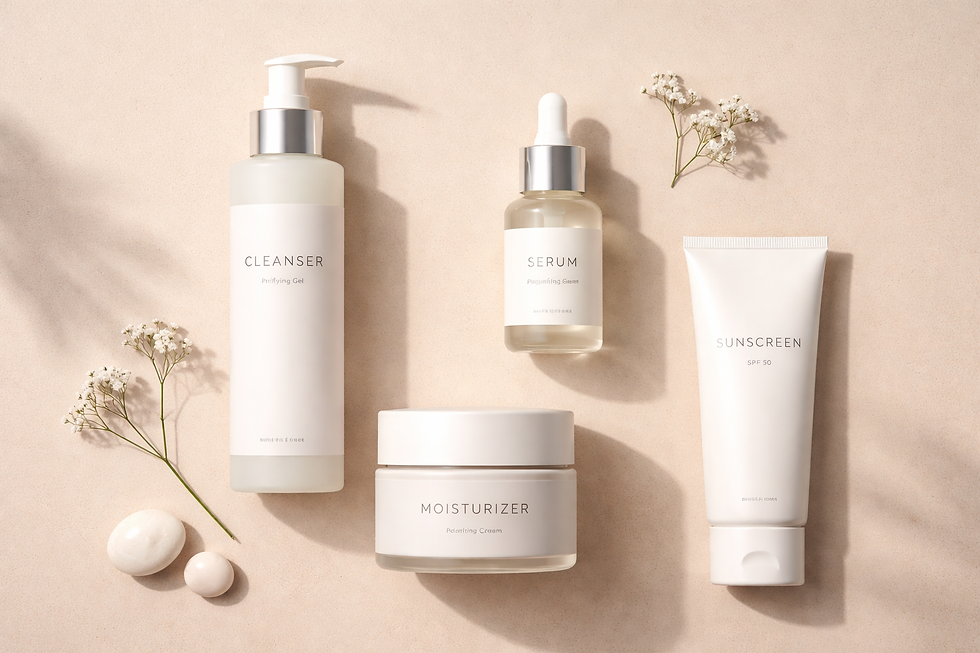
These routine principles align with modern dermatology approaches to skin barrier repair, pigment-safe treatment, and microbiome-supportive skincare for skin of colour.
A regenerative routine isn't about having 15 steps. It's about having a few highly effective, consistent steps that work in harmony. Here are the simple daily pillars.
Pillar 1: Gentle, Hydrating Cleansing

The purposeand goal of cleansing is to remove impurities without stripping your skin's precious lipid barrier. Over-stripping can lead to dryness and inflammation—the very things we want to avoid.
Dermatologists are more and more recommending oil-first washing to remove sunscreen and makeup. This is to lower friction and barrier damage, especially in skin that is prone to hyperpigmentation.
First Cleanse (Oil-Based): Use a cleansing oil or balm to gently dissolve sunscreen, makeup, and excess sebum.
Second Cleanse (Water-Based): Follow with a non-foaming, hydrating cream or gel cleanser. Look for things like glycerin, hyaluronic acid, and ceramides.
Pro-Tip: In the morning, a simple rinse with lukewarm water or a swipe with a hydrating toner may be all you need.
Pillar 2: Hydrate, Soothe, and Treat with Serums
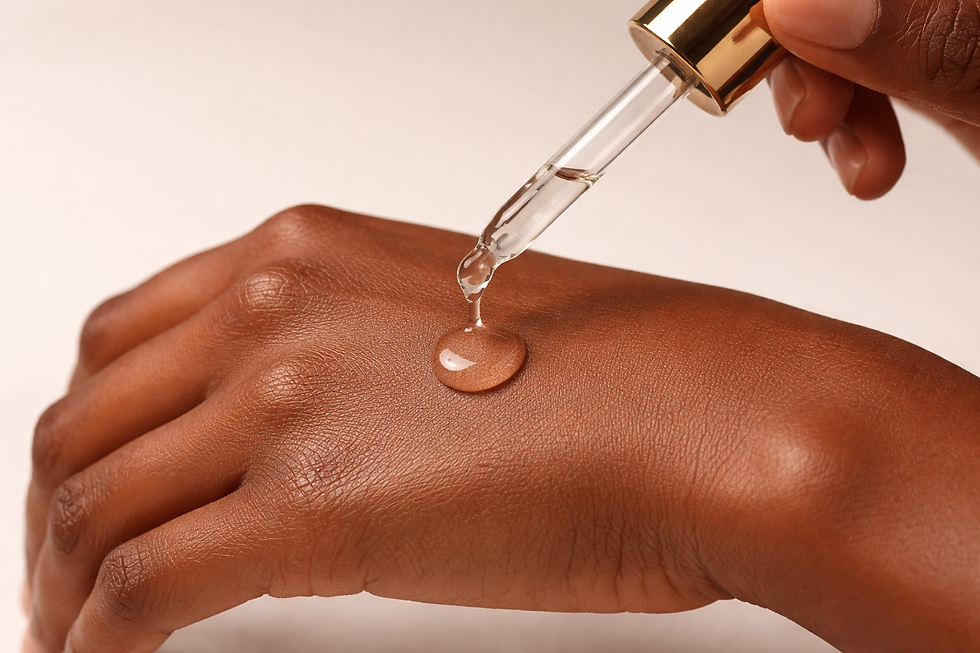
Serums are your targeted treatment step. This is where you deliver the active ingredients that will calm, brighten, and strengthen your skin.
The Regenerative Approach: Focus on serums with ingredients that support your skin's health and gently address hyperpigmentation.
Niacinamide (The All-Star): This form of Vitamin B3 is a hero ingredient. It strengthens or enhances the skin barrier, calms inflammation and redness, regulates oil production, and, crucially, helps to inhibit the transfer of pigment, which can change the appearance of dark spots over time.
Hyaluronic Acid & Glycerin (The Hydration Magnets): These are humectants that draw moisture into the skin, giving it that plump, dewy look and combating ashy tones.
Gentle Tyrosinase Inhibitors (The Brighteners): Tyrosinase is the enzyme responsible for melanin production. Ingredients that gently inhibit this enzyme can help prevent and fade hyperpigmentation. Look for azelaic acid, kojic acid, alpha arbutin, or liquorice root extract.
Vitamin C (The Protector): Use a Vitamin C serum in the morning. It's a powerful antioxidant that protects against environmental damage and has brightening properties. For sensitive skin, look for gentle derivatives like Tetrahexyldecyl Ascorbate.
All recommended ingredients are considered safe for long-term use in melanin-rich skin when introduced slowly and used with daily sunscreen.
Pillar 3: Moisturise to Lock and Seal

A good moisturiser is like a protective shield for your skin. It locks in the hydration from your serums and reinforces your skin's barrier to prevent water loss.
The Regenerative Approach: Look for moisturisers rich in ceramides, shea butter, and peptides. These ingredients mimic your skin's natural structure, helping to repair the barrier and keep it supple and resilient. Don't be afraid of richer textures, especially at night.
Pillar 4: Protect with Sunscreen (The Non-Negotiable)
This is the most critical step in any regenerative skincare for melanin-rich skin routine. Sun exposure makes hyperpigmentation darker and harder to treat. Daily, consistent sun protection is your best defence.
The Regenerative Approach: Find a broad-spectrum sunscreen with at least SPF 30 that you love to wear every single day.
Mineral Sunscreens: Zinc oxide, titanium dioxide are great for sensitive skin. Newer "tinted" or "sheer" formulas are designed to blend beautifully without a white cast.
Chemical Sunscreens: These are often more cosmetically elegant and invisible on deeper skin tones. Look for modern formulas that are gentle and effective.
Pro-Tip: The "two-finger rule" is a great way to ensure you're applying enough. Squeeze a line of sunscreen onto your index and middle fingers, and apply that amount to your face and neck.
Daily sunscreen use is the most effective proven method for preventing worsening hyperpigmentation and uneven tone in skin of colour.
Your Simple Daily Routine: A Printable Guide
 My Daily Regenerative Skincare Ritual MORNING (AM) ROUTINE
EVENING (PM) ROUTINE
|
You can download and print this routine checklist to help you keep your skin care simple and regular while keeping note of what works best for your skin.
Frequently Asked Questions (FAQ)

1. What about exfoliation and retinoids? Are they safe for melanin-rich skin?
Yes, but with caution! Over-exfoliation is a primary cause of inflammation and hyperpigmentation. Avoid harsh physical scrubs. Instead, opt for gentle chemical exfoliants like lactic acid or mandelic acid 1-2 times a week. Retinoids can work quite well, but you should start with a low dose and use them for a few evenings a week to get used to them. Always use a moisturizer as a buffer.
2. Why do so many "brightening" products seem to make my skin worse?
Many aggressive brightening products rely on high concentrations of harsh acids or ingredients that can irritate the skin. For melanin-rich skin, this irritation can backfire, causing more inflammation and hyperpigmentation. The regenerative approach favours gentle, consistent treatment over quick, harsh fixes.
3. How long will it take to see a difference in my hyperpigmentation?
Being patient is very important. Hyperpigmentation that is fading is a long process, not a short one. If you stick to a practice that includes protecting your skin from the sun and gently brightening it, you can start to see little changes in 4 to 6 weeks and bigger changes in 3 to 6 months.
Product examples mentioned in this guide are based on formulation quality, ingredient research, and suitability for sensitive, melanin-rich skin, not paid placements.
Embrace Your Skin's Regenerative Power

Your skin is intelligent. It has an incredible, natural ability to heal and renew itself. The goal of a regenerative skincare routine for melanin-rich skin is to simply provide the right environment for that magic to happen.
It's about trusting the process, calming down, staying hydrated, and protecting yourself. By following these easy, consistent actions, you are not only working toward a more even and glowing complexion, but you are also honoring the particular beauty of your skin and starting a journey of deep self-care.
You can download and print this routine checklist to help you keep your skin care simple and regular while keeping note of what works best for your skin.
What is one regenerative step you're excited to incorporate into your routine? Share your journey and questions in the comments below!
This article was last reviewed in January 2026 and will be updated annually or when major skincare research changes occur.


Comments