
The 2026 Retinaldehyde Guide: Why I Swapped Retinol for This Gentle Powerhouse
Updated: Feb 20

By Janerine Nevins | Founder of Pearlypetal | Last Updated: January 27, 2026 | Estimated Read Time: 10 minutes
Medical Disclaimer: The things you read on Pearly Petal are simply for learning. I love learning about and doing investigate on skin care, but I'm not a licensed dermatologist. Skin care has different effects on different people. When you use new active ingredients like Retinaldehyde, you should always do a patch test first. You can also talk to your doctor for more specific advice.
Editorial Standards & Sources
This article is reviewed against current dermatology literature, ingredient safety data, and formulation research available as of 2026. Scientific references include clinical studies on retinaldehyde conversion pathways and antibacterial activity published in peer-reviewed dermatology journals.
My Retinol Frustration: A Story of Redness and Patience
I was a devoted retinol user for years because that's what all the magazines recommended. I dutifully applied it, patiently waiting for the "gold standard" results. Instead, I got flakiness, irritation, and redness around my nose and chin. It was frustrating. I wanted the proven benefits of Vitamin A, but my sensitive skin wasn't having it.
Through a deep dive into scientific literature, I discovered Retinaldehyde (or retinal), a different form of Vitamin A that promised the results of retinol but without the irritation. Swapping my old retinol for a stabilised retinal serum has genuinely changed my skin’s resilience and brightness. Here’s why this powerful, yet gentle, ingredient is a game-changer for Pearly Petal readers.
I also cross-checked my experience with published clinical data on retinaldehyde tolerance in sensitive and melanin-rich skin before making it a permanent part of my routine.
Retinal vs. Retinol: The Conversion Advantage

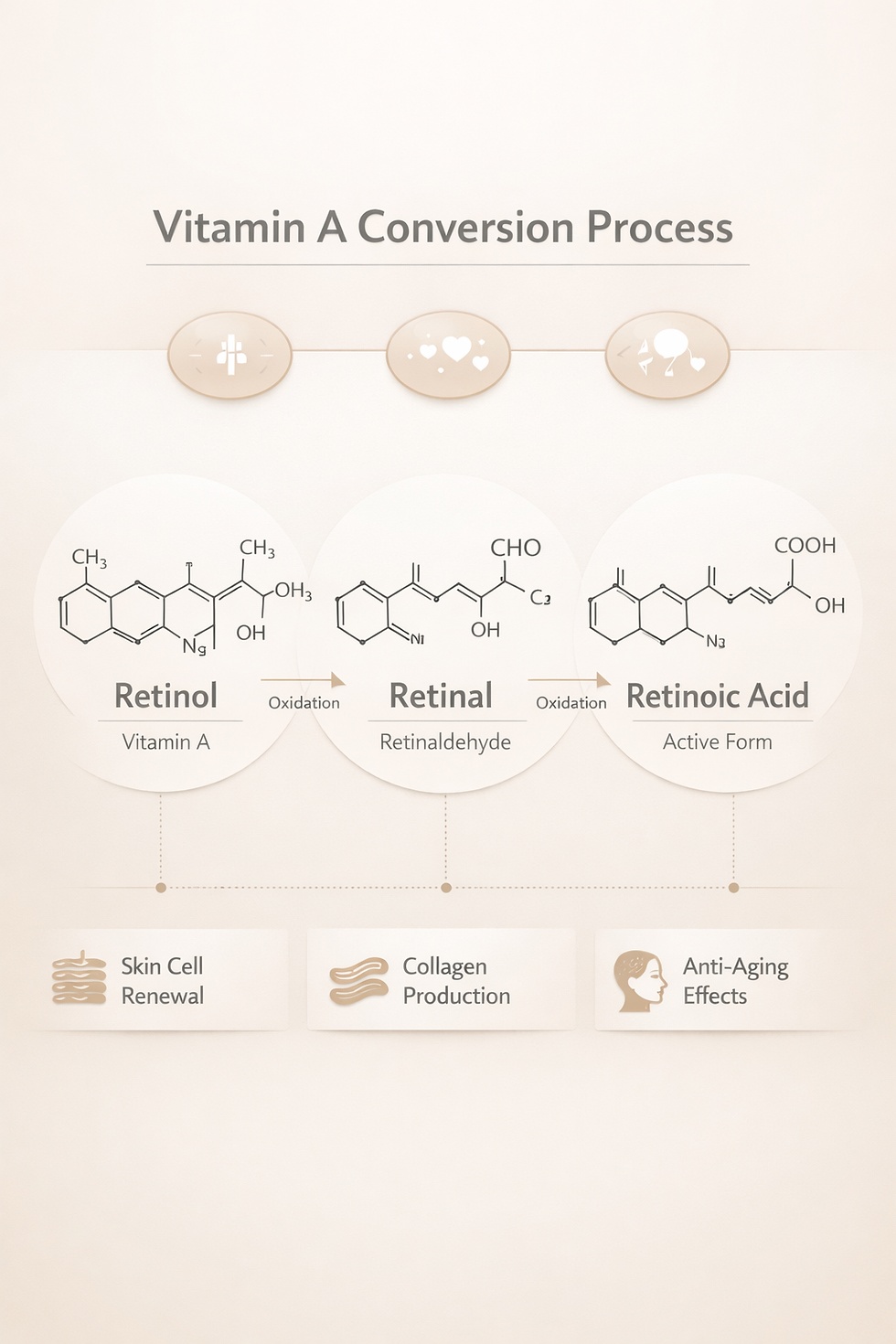
The key difference between retinol and retinal is how close they are to the active form the skin uses, called retinoic acid.
Retinol needs two conversion steps in the skin to become retinoic acid. This makes it gentler, but it also takes longer to see results (sometimes 6-12 weeks).
Retinaldehyde is just one single conversion step away from retinoic acid. This makes it work faster and more efficiently, but historically harder to stabilise in products.
The result? Retinal delivers results up to about 11 times faster than retinol This conversion efficiency is documented in dermatological pharmacology research comparing retinoid bioavailability and irritation profiles. while maintaining a similar low potential for irritation, making it suitable even for sensitive skin users like me who struggled with traditional formulas.
Why I'm Obsessed with Retinal (The Benefits)

Retinaldehyde doesn't just do one thing; it's a true multitasker for skin longevity.
Faster, Visible Results: I saw improvements in my skin texture and radiance within just a few weeks of consistent use, far faster than with retinol. Clinical studies support this, showing visible results in as little as 4-8 weeks.
Acne-Fighting Power: Retinal is the only over-the-counter retinoid with direct antibacterial properties, which helps combat blemish-causing bacteria and unclog pores.
Collagen Boosting: It effectively stimulates collagen production to improve elasticity and reduce the appearance of fine lines and wrinkles.
Fades Dark Spots: By promoting healthy cell turnover and inhibiting melanin production, it helps unify skin tone and fade hyperpigmentation or age spots.
How to Integrate Retinal into Your Pearly Petal Routine

Incorporating this ingredient requires a little care to avoid overwhelming your skin barrier.
Start Low and Slow: Retinal comes in various strengths (e.g., 0.01% to 0.2%). Begin with the lowest concentration to build your skin's tolerance.
If you are pregnant, breastfeeding, or undergoing prescription dermatology treatments, avoid retinoids unless approved by your healthcare provider.
Nighttime Only: Retinal is photosensitive (meaning the sun can make it less effective), so apply it exclusively in the evening to clean, dry skin.
The "Sandwich" Technique: If you have sensitive skin, apply a layer of a bland moisturiser before and after your retinal serum to buffer the effects and minimise irritation.
SPF the Next Morning: This is non-negotiable. All retinoids increase sun sensitivity, so daily application of a broad-spectrum SPF 30 or higher is mandatory.
Pairing: It works beautifully with hydrating ingredients like hyaluronic acid and niacinamide, which help soothe the skin and strengthen the barrier.
our Printable Retinal Routine Checklist (Free PDF)
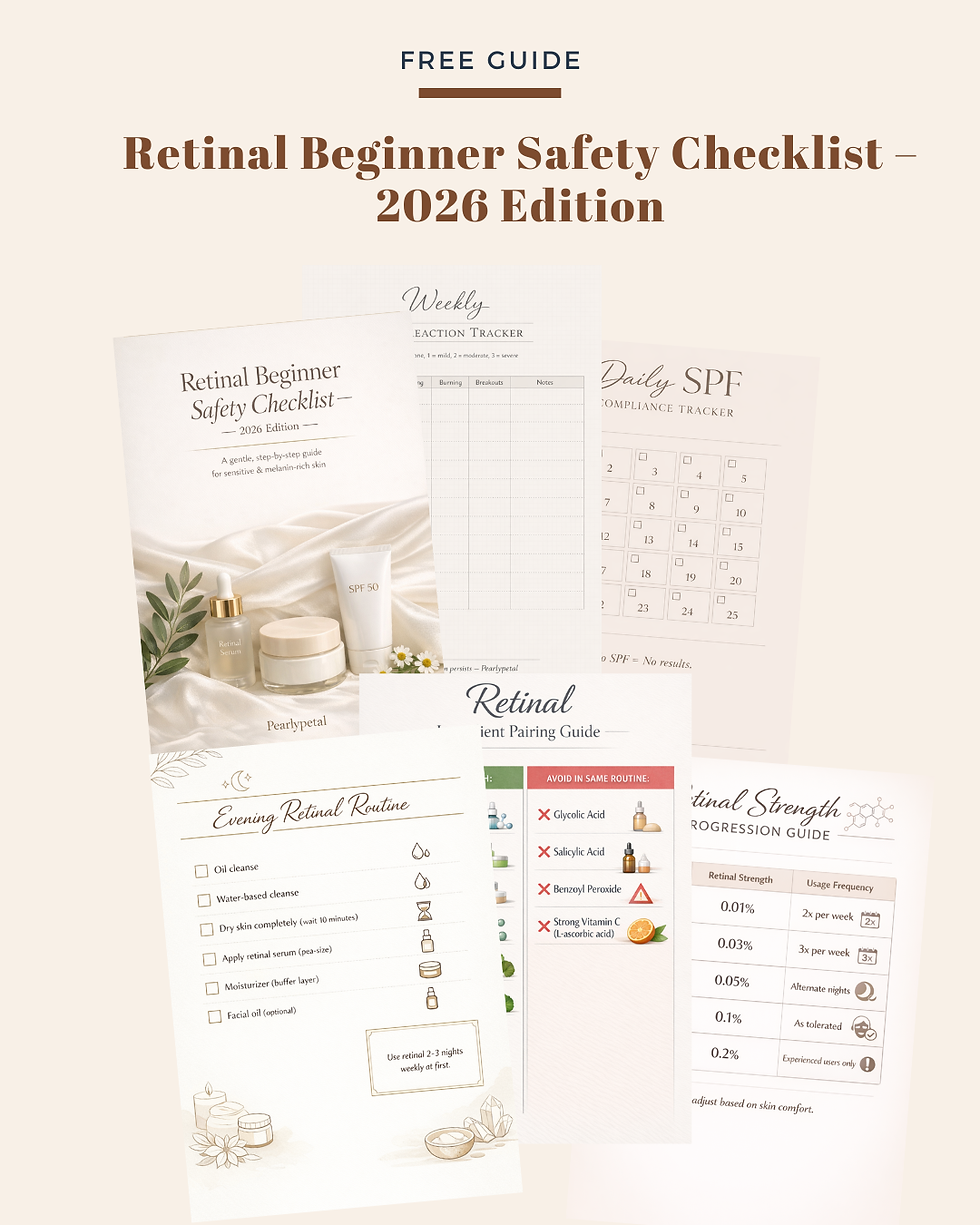
I made a free (PDF) printable checklist that you can download and put in your skincare drawer or on your phone to make starting retinal easy and safe.
What it has:
AM & PM retinal routine steps
Strength progression guide (0.01% → 0.2%)
Irritation monitoring tracker
Ingredient pairing guide (what to use / what to avoid)
Weekly tolerance checklist
SPF compliance reminder
Patch test instructions
Download the “Retinal Beginner Safety Checklist – 2026 Edition” here →
Tip: Place this checklist next to your products for the first 8 weeks to prevent overuse and irritation.
Recommended Retinal Products
Here are some reputable over-the-counter retinaldehyde products I've researched:
How These Products Were Selected
Products listed below were chosen based on ingredient transparency, retinal concentration disclosure, formulation stability, brand safety record, and availability in the UK market. No brand paid for placement.
Merchant | Product Name | Price |
£15.20 | ||
£50.40 ~£63.00~~ | ||
£99.00 |
Final Thoughts from the Pearly Petal Lab

Making the switch to Retinaldehyde was the best decision I've made for my skin. It's the perfect balance of potency and gentleness, giving me that luminous, healthy glow I was chasing for years with traditional retinol. Remember, consistency is the key to skin longevity.
Download the “Retinal Beginner Safety Checklist – 2026 Edition” here →
Author Bio
Janerine Nevins started Pearlypetal and is its main writer. She has a history in health and social care and has been through a lot with skincare and ageing, so she can talk about things that are frequently too much for people to handle. Janerine thinks that skin tales are really human stories that are moulded by lifestyle, emotions, and everyday habits. She writes to make individuals feel noticed, encouraged, and empowered. Her work combines investigation with real-life experience and deep conversations with trustworthy specialists to give advice that feels both solid and genuinely caring. Here you can find out more about her story.
These articles discuss and talk about the pros and cons of Retinaldehyde versus retinol, and offer product recommendations:


Comments