
Top Peptides for Anti-Ageing on Dark Skin 2026: Gentle, Brightening Alternatives
Updated: Feb 24
By Janerine Nevins | Founder of Pearlypetal | Last Updated: January 16, 2026 | Estimated Read Time: 10 minutes

A Quick Note from the Author
Disclaimer: I am a Skin Health Investigator and founder of PearlyPetal with a BSc in Health and Social Care. with a deep passion for inclusive cosmetic science. I am not a medical doctor or dermatologist. This guide is based on extensive research into scientific literature and expert consensus. It is for educational purposes only. For personalised skincare advice and diagnoses, please consult a board-certified dermatologist, preferably one with experience in treating skin of colour.
For the longest time, my relationship with "anti-ageing" skincare was complicated. I had read about the "gold standard" ingredients, but my own experience taught me to be careful. I realized early on that a substance strong enough to make the skin look better may also be strong enough to cause inflammation, which would leave behind the dark areas I was attempting to avoid in the first place. I felt like I had to choose between targeting fine lines and maintaining an even skin tone.
It was a frustrating dilemma until I discovered the world of peptides. I started to see them as the "intelligent" ingredients in skincare. They weren't about aggressive resurfacing; they were about communication. Peptides are like tiny messengers that tell your skin cells what to do make more collagen, relax a little, heal faster.
This concept of gently guiding the skin back to a healthier, more youthful state, rather than forcing it, was a revelation. Finally, here was a category of ingredients that could offer profound anti-ageing benefits without the inflammatory risk. This guide is my deep dive into the top peptides for anti-ageing on dark skin in 2026, designed to help you harness their gentle power for your most resilient, radiant skin yet.

In the world of skincare, retinoids have long held the crown as the king of anti-ageing. But for those of us with melanin-rich skin, the king can sometimes be a tyrant. While incredibly effective, high-strength retinoids can come with a significant risk of irritation, redness, and peeling all forms of inflammation that can lead directly to post-inflammatory hyperpigmentation (PIH).
This has left many of us searching for powerful, effective alternatives that respect the unique biology of our skin. Enter peptides.
Peptides are one of the most exciting and promising classes of ingredients in modern dermatology, especially for skin of colour. They are not acids, they are not exfoliants; they are cell-communicating powerhouses that work in harmony with your skin. They offer a sophisticated, gentle, and highly effective way to address the signs of ageing from loss of firmness to uneven tone without compromising your skin's barrier or triggering an inflammatory response.
This article will demystify the science of peptides and introduce you to the top peptides for anti-ageing on dark skin in 2026 that you should have on your radar.
Download your free printable: Peptide Routine & Product Finder for Dark Skin (2026 Edition) – a simple checklist to choose the right peptides, avoid irritation, and build your routine safely.
What Are Peptides? The Building Blocks of Your Skin

In the simplest terms, peptides are short chains of amino acids. When these chains get longer, they form proteins. And the most famous protein in your skin? Collagen.
Think of it like this:
Amino Acids are the letters.
Peptides are the words.
Proteins (like collagen and elastin) are the full sentences.
In skincare, these "words" act as messengers. When you put them on your skin, they can tell your cells to do certain things. This is why they are so smart. They can do more than simply add moisture; they can also inform your skin, "Hey, we need more collagen over here!" or "It's time to calm down and heal."
As noted in research highlighted by institutions like the Linus Pauling Institute at Oregon State University, different peptides have different jobs, which is why you'll often see them grouped into categories.
The Best Peptides for Anti-Ageing on Dark Skin: A Categorical Guide
The key to using peptides effectively is to choose the right "word" for the job you want done. For melanin-rich skin, we want peptides that not only build collagen but also calm inflammation and help with brightening.
1. Signal Peptides: The Collagen Builders

These are the most well-known types of anti-ageing peptides. They send a signal to your fibroblasts (the cells that make collagen) to ramp up production. More collagen means firmer, plumper, and more youthful-looking skin.
Peptides to Look For:
Palmitoyl Tripeptide-5: A star player known for its ability to stimulate and boost collagen synthesis and improve skin firmness.
Palmitoyl Tetrapeptide-7: Works to reduce inflammation, which is a crucial secondary benefit for preventing PIH.
Matrixyl 3000: This is a famous, trademarked combination of Palmitoyl Tripeptide-1 and Palmitoyl Tetrapeptide-7. It's one of the most researched peptide complexes for improving wrinkles and skin elasticity.
Why They're Great for Dark Skin: They offer a non-irritating pathway to building collagen, providing results similar to retinoids over time, but with a much lower risk of causing inflammatory side effects.
Pro Tip: Look for peptide products that combine multiple types of peptides. They work synergistically, like a well-orchestrated symphony rather than a solo performance.
2. Carrier Peptides: The Healing and Stabilising Crew

These peptides work by delivering trace minerals, like copper, to the skin. These minerals are essential for processes like collagen synthesis and wound healing.
Peptides to Look For:
Copper Peptides (GHK-Cu): This is the most famous carrier peptide. It has remarkable wound-healing and anti-inflammatory properties. Accelerating the healing of acne lesions or any skin irritation can significantly reduce the window of time in which PIH can form. It also stimulates collagen and has antioxidant benefits.
Why They're Great for Dark Skin: Their powerful anti-inflammatory and healing properties make them a perfect fit for a regenerative skincare regimen for melanin-rich skin. They help address concerns about ageing and hyperpigmentation simultaneously.
3. Neurotransmitter-Inhibiting Peptides: The "Botox in a Bottle" Alternative

These peptides work by subtly interrupting the nerve signals that make the muscles of the face contract, which makes expression lines . While they are not as dramatic as actual Botox injections, they can help to soften the appearance of dynamic wrinkles over time.
Peptides to Look For:
Argireline (Acetyl Hexapeptide-8): This is the most well-known peptide in this category. It's particularly popular for use around the eyes and on the forehead.
Why They're Great for Dark Skin: They offer a way to address expression lines without any invasive procedures or potential for irritation. They are a gentle, supportive measure.
4. Enzyme-Inhibiting & Brightening Peptides: The PIH Fighters

This is a particularly exciting category. Some peptides have been specifically designed to interfere with the process of hyperpigmentation.
Peptides to Look For:
Oligopeptide-68: This is a brightening peptide that works by inhibiting the tyrosinase enzyme, which is the key enzyme in melanin production.
Tetrapeptide-30: Another peptide known for its ability to visibly lessen the size and intensity of dark spots by calming inflammation and reducing pigment transfer.
Why They're Great for Dark Skin: These offer a highly targeted, non-irritating way to address hyperpigmentation, making them some of the top peptides for anti-ageing on dark skin in 2026. They are fantastic alternatives to hydroquinone or high-concentration acids.
How to Choose and Use Peptide Products

Look for "Cocktails": The most effective peptide products are often "cocktails" that contain multiple types of peptides, allowing them to work synergistically. A product with a signal peptide, a copper peptide, and a brightening peptide is a triple threat.
Prioritise Serums and Moisturisers: Peptides need to stay on your skin to work. They are most effective in leave-on products like serums and moisturisers, rather than rinse-off cleansers.
Check the Ingredient List: You want to see the peptide names listed relatively high up on the ingredient list, not at the very end.
Apply to Damp Skin: Peptides, like many active ingredients, penetrate better on slightly damp skin. Apply your peptide serum right after cleansing or toning.
Be Consistent: Peptides are not a one-night wonder. They work by communicating with your skin over time. You need to use them consistently, morning and night, for about 8-12 weeks to see significant results in skin texture and firmness.
Here is a step-by-step guide on how to set up your peptide routine.

Morning Routine:
Gentle Cleanser - Cream or oil-based, no foaming
Toner - Hydrating, alcohol-free
Peptide Serum - Apply to damp skin (except Argireline, which goes on dry)
Moisturiser - Ceramide-rich
SPF 50+ - Non-negotiable for melanin-rich skin
Evening Routine:
Double Cleanse - Oil cleanser first, then water-based
Toner - Hydrating
Treatment Serum - Peptide serum (this is where you can alternate with other treatments)
Moisturiser - Richer night cream
Facial Oil (optional) - Seal everything in
Pro Tip: If you're using multiple peptide products, layer from thinnest to thickest consistency. Wait 30 seconds between each layer.
Download your free printable: Peptide Routine & Product Finder for Dark Skin (2026 Edition) – a simple checklist to choose the right peptides, avoid irritation, and build your routine safely.
Click here to read more: Double Cleansing for Melanin-Rich Skin: The Complete Guide.
Common Mistakes That Sabotage Peptide Success

1. Using Peptides with Strong Acids
Don't use glycolic acid, salicylic acid, or benzoyl peroxide with peptides in the same routine. These can break down the peptide structure. Use acids in the morning and peptides at night.
2. Expecting Retinoid-Like Speed
Peptides work slowly and gently. You won't see results in 2 weeks. Give it 12-16 weeks minimum.
3. Skipping SPF
This is the biggest mistake. UV exposure degrades peptides and triggers the very hyperpigmentation you're trying to prevent. SPF is step zero.
4. Inconsistent Application
Peptides must be used every day to communicate that collagen is being made all the time. Not taking days off makes things a lot less effective.
5. Choosing Products Based on Hype, Not Formulation
That viral peptide product on TikTok might be fantastic at getting people to buy it, but it might not last very long. Peptides are delicate and need to be made correctly to work.
The Results Timeline: What to Expect

Weeks 1-4: Skin feels softer, more hydrated. Any immediate irritation (rare) would show up here.
Weeks 5-8: Texture improves, skin looks plumper. Fine lines may appear slightly softer.
Weeks 9-16: Noticeable firmness, reduction in expression lines, hyperpigmentation begins to fade.
Weeks 17-52: Continued improvement in all areas. Skin maintains a healthy, resilient quality.
.
Frequently Asked Questions (FAQ)
1. Can I use peptides with my other active ingredients, like Vitamin C and retinoids?
Yes, for the most part! Peptides are very agreeable.
With Vitamin C: They work beautifully together. Apply Vitamin C first, let it absorb, then apply your peptide serum.
With Retinoids: They are an excellent pairing. The peptides can help support the collagen-building effects of the retinoid while also helping to soothe some of the potential irritation. Apply peptides first, then your retinoid.
The Exception: Copper Peptides. There is some debate in the cosmetic science community about using copper peptides in the same routine as direct acids (like L-Ascorbic Acid or AHAs) and retinoids, as it could potentially impact their stability and efficacy. A safe approach is to use your copper peptide product in the morning and your retinoid/strong acids at night.
2. Are peptides expensive?
They can be, as they are high-tech ingredients that are costly to produce. However, as the technology becomes more widespread, more affordable and effective options are becoming available. It's better to invest in one well-formulated peptide serum from a reputable brand than multiple ineffective products.
3. Do peptides really work as well as retinoids?
They work differently. Retinoids primarily accelerate cell turnover, which can produce dramatic but sometimes irritating results. Peptides work by gently signalling the skin to repair and build itself up over time. For many with sensitive or melanin-rich skin, peptides offer a more sustainable, less risky path to achieving similar long-term goals of improved firmness and texture.
Download your free printable: Peptide Routine & Product Finder for Dark Skin (2026 Edition) – a simple checklist to choose the right peptides, avoid irritation, and build your routine safely.
The Future of Gentle, Intelligent Ageing
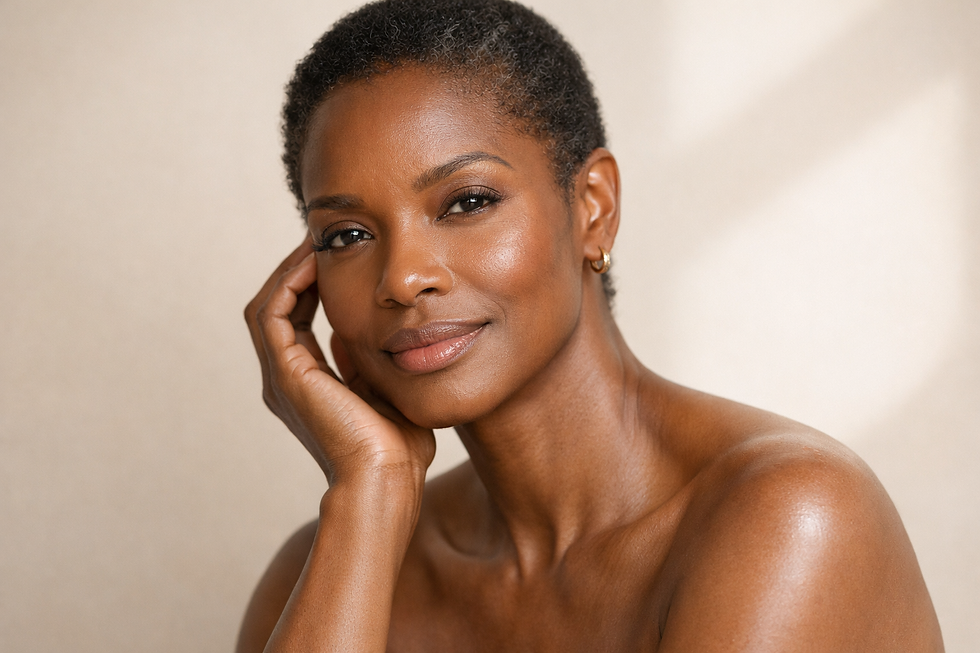
The rise of peptides marks a significant evolution in skincare, especially for those of us who have felt left out of the traditional anti-ageing conversation. We no longer have to choose between fighting wrinkles and fighting hyperpigmentation.
By incorporating the top peptides for anti-ageing on dark skin in 2026 into your routine, you are embracing a smarter, gentler, and more supportive approach. You are choosing to communicate with your skin, not command it. You are empowering it to be its strongest, healthiest, and most radiant self for years to come.
Have you tried peptide-based products? I would love to hear about your experiences and favourite finds in the comments below!
Related Articles:


Comments